GE VMIC-010
echnical Specifications
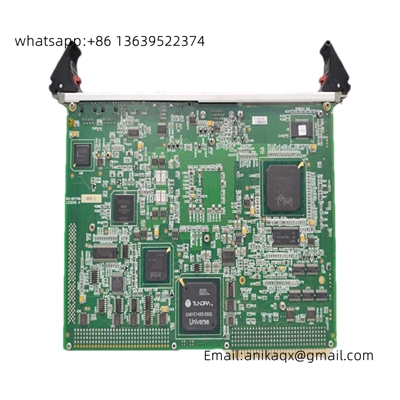
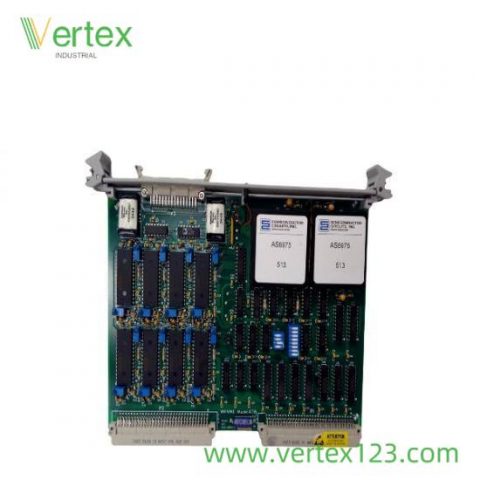
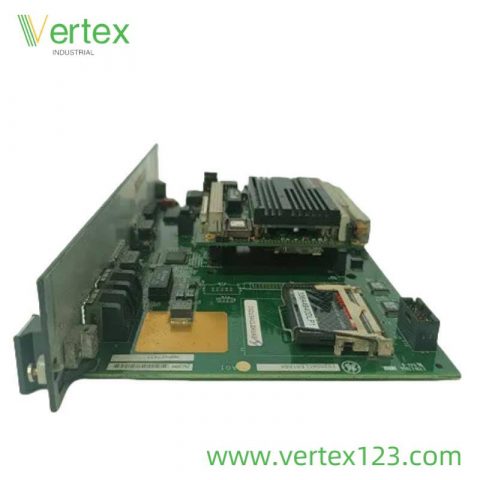
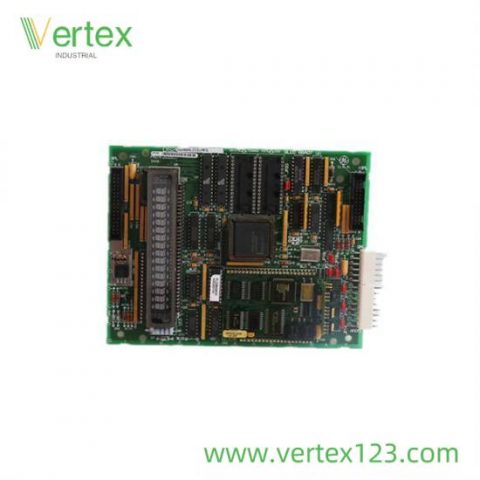
GE VMIC-010 is a high-performance reflection memory network card designed for real-time data sharing and deterministic communication in distributed systems. Key specifications include:
- Memory Capacity: Supports up to 128 MB of shared memory space, mapped directly into the system's addressable memory for low-latency access.
- Data Transfer Rate: Achieves 2.125 Gbps via optical fiber, enabling rapid data synchronization across nodes.
- Latency: Delivers sub-microsecond-level transmission delay, with deterministic performance critical for time-sensitive applications.
- Topology Support: Compatible with ring and star network topologies, allowing flexible system configurations.
Tag:
wechatPhone +8613639522374
Phone: +8613639522374
Email: anikaqx@gmail.com
connect:Anika
- Fiber Optic Range: Supports multi-mode fiber (300 m) and single-mode fiber (10 km), catering to diverse deployment scales.
- Interface: PCI or VME bus integration, depending on the model, ensuring compatibility with standard computing architectures.
- Operating Temperature: Rated for -40°C to +85°C, suitable for extreme industrial and aerospace environments.
- MTBF: Exceeds 50,000 hours, ensuring long-term reliability in mission-critical systems.
Functional Characteristics
- Hardware-Based Data Sharing
- Eliminates software overhead by using dedicated hardware to replicate memory updates across nodes, ensuring minimal latency and CPU utilization.
- Data written to one node’s reflection memory is automatically broadcast to all connected nodes, enabling seamless real-time collaboration.
- Deterministic Performance
- Guarantees consistent transmission times, making it ideal for applications requiring precise timing, such as simulation, control systems, and data acquisition.
- High Reliability
- Designed with industrial-grade components and conformal coating to resist dust, moisture, and vibration.
- Supports redundant power supplies and hot-swapping for uninterrupted operation.
- Scalability
- Supports up to 256 nodes in a single network, allowing large-scale distributed systems to operate cohesively.
- Software Compatibility
- Integrates with NI VeriStand, LabVIEW, MATLAB/Simulink, and other real-time software frameworks, simplifying system development and testing.
Application Scenarios
- Aerospace and Defense
- Used in flight simulators to synchronize cockpit controls, avionics, and environmental systems in real time.
- Supports missile guidance systems by ensuring low-latency communication between sensors, processors, and actuators.
- Industrial Automation
- Enables real-time control in manufacturing lines, where precise coordination between robots, sensors, and PLCs is essential.
- Facilitates distributed data acquisition in power plants, oil refineries, and chemical processing facilities.
- Automotive Testing
- Integrates with Hardware-in-the-Loop (HIL) systems to simulate vehicle dynamics and test electronic control units (ECUs) under realistic conditions.
- Scientific Research
- Used in particle accelerators and wind tunnels to synchronize high-speed data acquisition from multiple sensors with sub-microsecond accuracy.
- Medical Imaging
- Supports real-time image processing in MRI and CT scanners, ensuring seamless data flow between detectors, processors, and display systems.
Key Advantages
- Ultra-Low Latency: Hardware-based replication ensures data is shared faster than traditional network protocols.
- High Bandwidth: Optical fiber connectivity supports rapid data transfers, even in large-scale systems.
- Ease of Use: Simplifies system design by reducing the need for complex software protocols.
- Rugged Design: Withstands harsh environments, making it suitable for industrial and aerospace applications.
Product has been added to your cart





There are no reviews yet.