

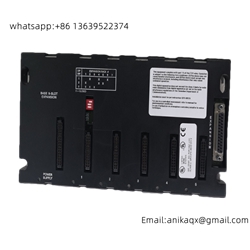

Technical Specifications
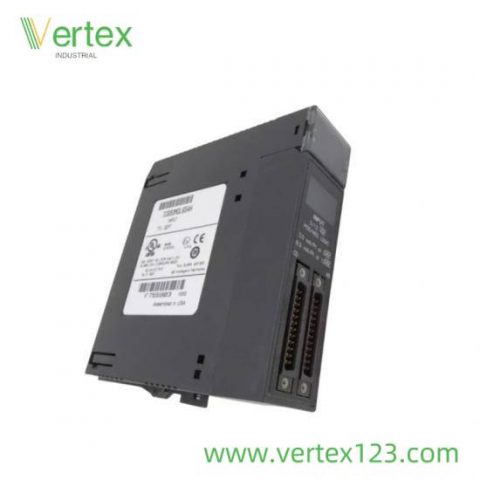
- Processor: Equipped with an 80486 DX 4 microprocessor, running at a clock speed of 96 megahertz (MHz).
- Memory: Has 512 kilobytes (KB) of random – access memory (RAM) for program and data storage, and 256 KB of non – volatile RAM (NV – RAM) to retain data without power.
- I/O Capacity: Supports up to 2048 (2K) discrete I/O points (any combination of inputs and outputs) and a maximum of 8192 (8K) analog I/O words.
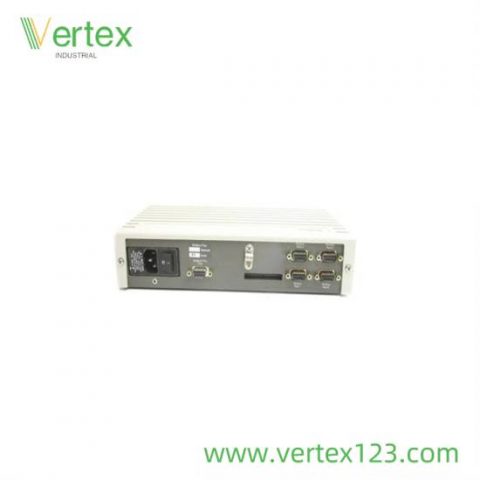
- Communication Ports: Features three serial ports, including one RS – 232 and two RS – 485 interfaces, enabling communication with various devices such as sensors, actuators, and other PLCs.
- Power Supply: Requires a 5 – volt direct – current (DC) input, with a typical current draw of 3.1 amps.
- Operating Temperature: The operating temperature range is 0 °C to 60 °C (32 °F to 140 °F).
Function Features
- High – Speed Processing: With a clock speed of 96 MHz and an efficient 80486 – based processor, it can execute boolean functions at a rate of 0.4 microseconds per function, enabling fast – paced control and data processing.
- Flexible Communication: The multiple serial ports (RS – 232 and RS – 485) provide flexible connectivity options for different communication protocols and devices, facilitating integration into complex industrial networks.
- Memory Protection: Offers both software – based password protection and a key – switch memory protection mechanism to safeguard user programs and data from unauthorized access and modification.
- Real – Time Control: Capable of real – time control of machines and processes, ensuring precise and timely responses to changing process conditions.
Application Scenarios
- Industrial Automation Production Lines: Used to control the operation of various machines and equipment on the production line, such as conveyor belts, robotic arms, and assembly machines, to ensure smooth and efficient production processes.
- Process Control in Chemical Industry: Suitable for monitoring and controlling chemical processes, such as reactor temperature, pressure, and flow rate, to maintain process stability and product quality.
- Power Generation and Distribution: Can be applied in power plants to control power generation units, substations, and power distribution systems, ensuring the reliable supply of electricity.
- Manufacturing Industry: In manufacturing plants, it can be used for tasks such as quality control, production scheduling, and equipment monitoring, helping to improve production efficiency and product quality.


There are no reviews yet.