

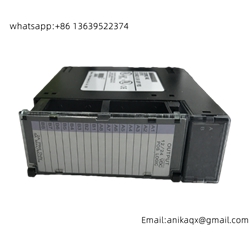

Technical Specifications
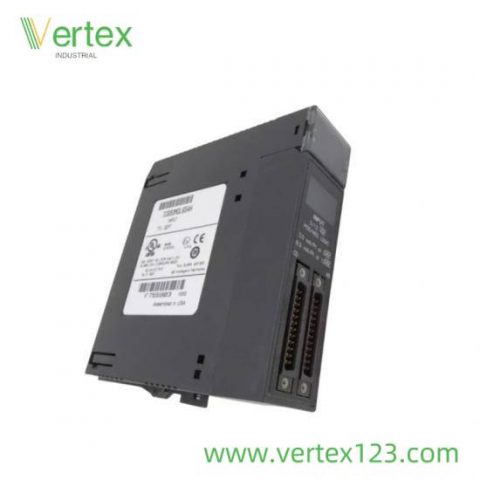
- Processor: Equipped with a 16 – MHz 80386DX microprocessor, which supports 32 – bit instructions and floating – point operations.
- Memory: Has 1M bytes of fixed memory, and the memory can be expanded to 512 KB.
- I/O Capacity: Supports up to 12 k discrete I/O points (any mix) and 8 k analog I/O points.
- Communication Interface: It has a 10/100M auto – adaptive Ethernet network interface.
- Power Supply: AC/DC converter, providing a variety of voltage and current options.
- Mechanical and Environmental Parameters: The vibration rating is 1 g at 57 to 150 hertz, and the shock rating is 15 g for 11 milliseconds duration. The operating temperature range is 0 to 60 degrees Celsius, the storage temperature range is – 40 to 85 degrees Celsius, and the recommended relative humidity range is 5 to 95% non – condensing.
Function Features
- High – performance Processing: With a 16 – MHz processor and a processing speed of 0.4 microseconds per boolean function, it can efficiently perform various control tasks.
- Memory Expansion: The expandable memory feature allows it to meet the needs of larger – scale applications.
- Memory Protection: Equipped with a key – switch memory protection function to prevent unauthorized access and modification of the module’s data.
- Programming Compatibility: It can be programmed using MS – DOS – based or Windows – based programming software packages, such as Logicmaster 90 – 70, Versapro Professional Edition, and Logic Developer PLC Professional Edition.
- Redundancy Support: Some models support redundancy, which can improve the reliability of the system and reduce the risk of single – point failures.
Application Scenarios
- Industrial Automation: Widely used in factory production lines, such as controlling the operation of conveyor belts, robotic arms, and other equipment to ensure the smooth progress of production processes.
- Process Control: In the fields of chemical, petroleum, and power, it is used to monitor and control process parameters such as temperature, pressure, and flow rate to ensure the stable operation of the process.
- Building Automation: Can be used in building management systems to control lighting, air – conditioning, and elevator systems, achieving intelligent management and energy – saving operation of buildings.


There are no reviews yet.