

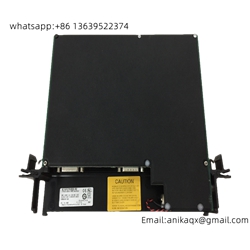

- Bus Topology:
- Supports (daisy-chain) architecture on both primary and secondary buses.
- Features terminal resistor connection points (75Ω, 100Ω, 120Ω, 150Ω) for network stability.
- Power Requirements:
- Operating voltage: 90–135 VAC or 105–150 VDC.
- Nominal voltage: 115 VAC / 125 VDC.
- Power consumption: 115 VA (48 VAC) / 125 W (24 VAC) under full load.
- Environmental Tolerance:
- Operating temperature: 0°C to 55°C (32°F to 131°F).
- Storage temperature: -40°C to 85°C (-40°F to 185°F).
- Humidity: 5%–95% non-condensing.
- Mechanical Design:
- DIN rail or panel mounting for flexible installation.
- Dimensions: Approximately 120mm × 80mm × 40mm.
- Weight: ~0.5 kg.
Key Features
- High-Speed Communication:
- Enables real-time data transfer with minimal latency, critical for time-sensitive applications.
- Redundancy Support:
- Built-in redundancy for primary and secondary buses ensures continuous operation during network failures.
- Diagnostic Capabilities:
- Monitors module health and I/O status, forwarding diagnostic data to the host CPU or handheld programmer.
- Flexible Configuration:
- Screw-terminal connections for easy wiring of Genius Bus and optional redundant networks.
- Supports hot-swapping (if module suffix includes “J”) for maintenance without system shutdown.
- Robust Design:
- Withstands industrial vibrations, shocks, and electromagnetic interference (EMI).
- Complies with UL, CE, ATEX C1D2 standards for safety in hazardous environments.
Application Scenarios
- Manufacturing Automation:
- Controls conveyor systems, robotic arms, and CNC machines in automotive and electronics assembly lines.
- Energy Management:
- Monitors substations, generators, and renewable energy systems (e.g., solar inverters, wind turbines).
- Water Treatment:
- Manages pH levels, turbidity, and chemical dosing in wastewater plants.
- Oil and Gas:
- Operates in explosive atmospheres (ATEX C1D2) for pipeline monitoring and valve control.
- Transportation:
- Ensures stable signaling in metro and railway systems.
Comparison with Competitors
- Siemens ET 200SP:
- Lacks ATEX certification for hazardous areas and supports fewer channels per module.
- Rockwell Automation 1734-OB8C:
- Offers lower resolution (10-bit) and no built-in isolation for analog signals.
- Schneider Electric TM221M:
- Limited to 4 channels and a narrower input voltage range (85–264 VAC).
Maintenance and Troubleshooting
- Common Issues:
- No Communication: Verify wiring, jumper settings, and terminal resistance values.
- Overheating: Ensure proper ventilation and avoid blocking cooling vents.
- Intermittent Operation: Check for loose connections or corrosion on terminals.
- Best Practices:
- Regular Inspections: Inspect for dust accumulation, physical damage, or loose wiring.
- Firmware Updates: Apply the latest firmware to improve performance and security.
- Spare Parts: Keep replacement modules on hand to minimize downtime.
- Environmental Control: Maintain optimal operating conditions (temperature, humidity) to extend lifespan.


There are no reviews yet.