


- Off-State Leakage Current: Less than 1 mA
- Switching Speed:
- Turn-On Time: 0.2 ms maximum
- Turn-Off Time: 0.5 ms maximum
- Isolation: Optical isolation between output circuits and controller backplane (2500 VAC for 1 minute)
- Power Supply: 24 VDC field power required for load operation; module logic powered via backplane
- Backplane Current Draw:
- 5 VDC: 180 mA (typical)
- Operating Temperature: 0°C to 60°C
- Storage Temperature: -40°C to 85°C
- Relative Humidity: 5% to 95% non-condensing
- Mounting: DIN rail or panel mount
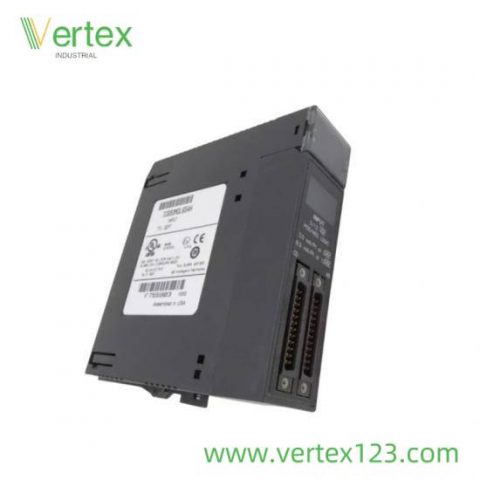
- Dimensions: Standard VersaMax module size
- LED Indicators: Green RUN LED and individual output status LEDs for visual monitoring
- Certifications: CE, UL, CSA, and compliance with relevant industrial standards
Functional Features
- Solid-state output design ensures fast switching, long life, and high reliability compared to electromechanical relays
- Supports 16 independent sourcing outputs for driving DC loads such as solenoids, valves, relays, and small motors
- Each output features overcurrent and short-circuit protection with automatic shutdown and recovery
- Configurable output behavior through programming software, including power-up state and fail-safe modes
- Compatible with VersaMax CPUs and configurable using Proficy Machine Edition (PME) software
- High noise immunity due to optical isolation between control and output circuits
- Individual point status indicators enable real-time monitoring and simplify troubleshooting
- Designed for use in both standalone and networked control systems
- Supports hot-swapping in systems equipped with compatible baseplates and power redundancy
Applications
- Machine control systems requiring high-speed DC output switching
- Automation of assembly, packaging, and material handling equipment
- Control of pneumatic and hydraulic valves in industrial processes
- Integration into test stands and automated inspection systems
- Use in semiconductor manufacturing and precision equipment
- Deployment in transportation and rail systems for signal and control functions
- Implementation in energy and utility systems for load management
- OEM equipment requiring compact, reliable digital output solutions
Installation and Environmental Considerations
- Install in a clean, dry environment protected from dust, moisture, and corrosive gases
- Ensure adequate airflow around the module to prevent overheating during continuous operation
- Maintain ambient temperature within the specified operating range to ensure performance and longevity
- Use properly sized wiring and terminal blocks to handle load current and prevent voltage drop
- Route output cables away from high-voltage or high-noise sources to minimize interference
- Follow proper grounding practices for both the control system and field devices
- Verify field power supply stability and capacity before connecting loads to the module outputs


There are no reviews yet.